
I Fired My Oura Ring.
I switched to a Traffic Light Dashboard after realizing my scoreboards were controlling my life.

Welcome to the Midlife Field Guide.
One year.
Two Gen X friends.
Countless personal life experiments.
Can they figure out the meaning of midlife?
Subscribe for free!
Hello Midlifers!
In January, I conducted an experiment: Stop measuring everything in my life. No Apple Watch. No Oura Ring. No step counts, sleep scores, or productivity metrics.
Now the month is over. Here’s what happened...
My Month of No Measurement
Not measuring anything for an entire month generated deep concern from several of my apps, who feared something catastrophic had happened to me, with my health declining precipitously, my steps reduced to zero, and no sleep whatsoever.
I loved getting these notifications.
It made me feel like I’m some sort of rebel. “I’m doing ALL SORTS OF STUFF, but I’m not giving you any data about it! My life and my activities are suddenly a SECRET!”
(It’s a secret to me, too.)
I don’t really know how I slept in January.
I don’t know how many days I closed my rings, hit 10,000 steps, or was “ready.”
I don’t know whether I gained or lost followers on my social media accounts.
And you know what? It feels great. Turns out that nothing happens when you stop measuring. Except for relief. It’s like a big exhale. Whew! It’s genuinely been a big release of stress and daily metrics-generated anxiety that I did not know I was carrying. I don’t have to do this anymore. I can just live my life and pay attention to how I actually feel.
Do I feel hungry? Eat.
Do I feel tired? Sleep.
Do I feel brain fog? Stop working.
On January 23, I even cancelled my monthly Oura ring subscription. I very quickly realized that I don’t miss the daily health dashboard. It’s a great product, but I just don’t want to be tracked or measured anymore, or scored for my sleep.
I decided to listen to my body instead of an app.
And I will see a doctor for check-ups and anytime anything feels off.
I will confess that I DO know our subscriber numbers on Substack, but I have an excuse: if you want to write or publish a newsletter, the stats are literally at the top of the writing home page. I hadn’t realized it before, but almost the full space above the fold on the Substack dashboard is filled with… growth metrics. The message is clear—as a writer, your primary focus should be on more people and more views.
Up and to the right!
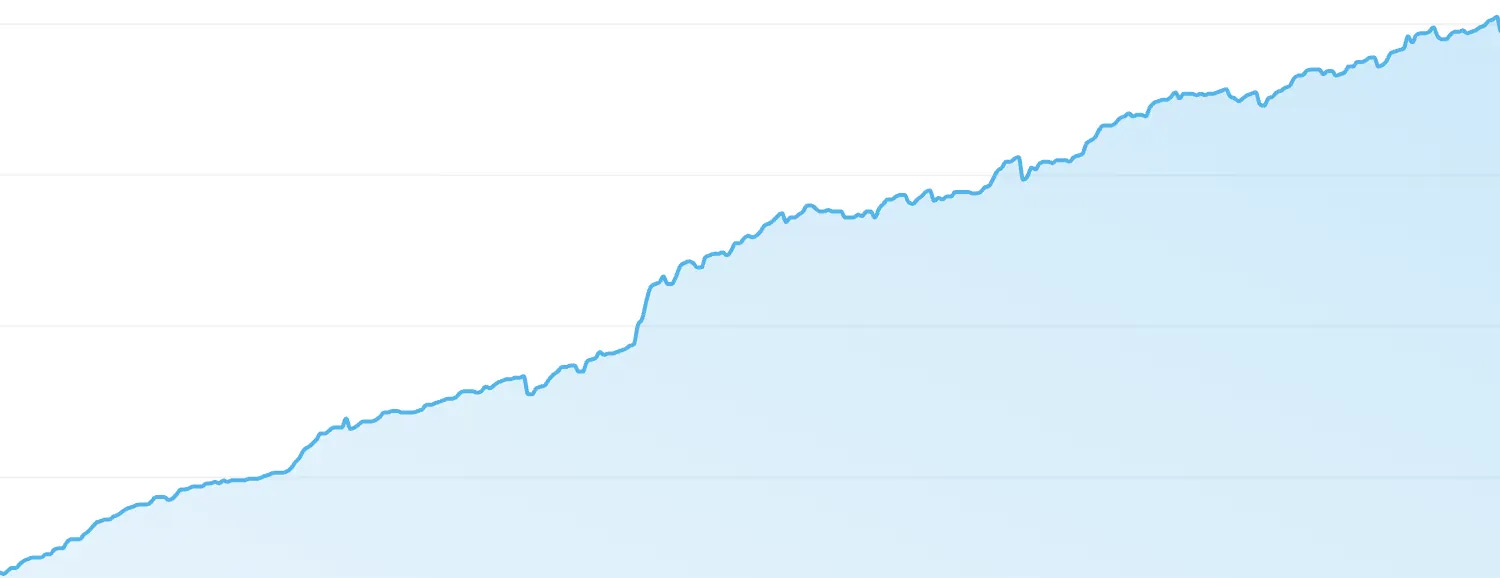
Much like the insights generated by my 5-Week Phone Fight, I have come to realize how much I am being shaped by the data collected about me and the scoreboards and dashboards that I’m presented with.
‘ENOUGH!’ to ‘Never Enough!’
It’s not just Substack. Every dashboard is about more. More growth, more optimization, more efficiency.
The data and the scoreboards constantly tell me that I am “never enough.” I’m never fit or healthy enough, productive enough, popular enough, wealthy enough, or successful enough. Oh, and my posts aren’t clickable, openable or shareable enough.
And the only solution is MORE. Forever.
‘Never enough’ hit me hard at the end of 2025. I felt like a failure, and I got myself into a pretty deep funk. My book was not a runaway best-seller. My keynote speaking died down after the mania of my book launch. As you can tell from the graph above, the Midlife Field Guide grew consistently, but there has been no hockey-stick growth curve yet.
Scoreboards almost always tell you how you’re doing relative to everyone else. And with pretty much everything on the planet, almost no one is the best at something. There is always someone who’s healthier, wealthier, smarter, more talented, more attractive… you name it.
I felt like a failure because at the end of the year, my feeds were filled with celebrations of how many books other people have sold, how many speeches other people gave in 2025, how big other people’s follower counts are, and other markers of success worth sharing publicly. It’s easy to fall prey to comparing yourself to impossible standards that make you miserable.
I let other people’s scoreboards affect my self-worth and my mood. With some time and reflection, I see things very differently.
I love my book. I’m hugely proud of it. And the goal was never to be a best-seller. It was to make the best book I possibly could for a very specific group of people, and I believe I did that.
I had a GREAT time giving talks in Copenhagen, New York City, Athens, Chicago, Toronto, and Vancouver last year. I loved every engagement, and I’m excited to do more. Plus, I probably wouldn’t even be happy living in hotels as a road warrior speaking all the time.
And so what if the Midlife Field Guide hasn’t gone viral, because it has changed my life for the better in so many ways. I have heard so much positive feedback from people in this community who are making changes in their own lives because of it. People starting phone detoxes, extended breaks from alcohol, and avoiding scoreboards as a result of the writing Geoff and I are doing here.
Until I stopped measuring, it was hard to realize how much ‘never enough’ has shaped me. Everything has become a competition, and we only validate the winners.
These are the ways “never enough” dashboards impact me:
Anxiety: Checking scores created a daily cycle of stress I didn’t realize I was carrying
Shame: More often than not, the data made me feel bad about myself
Comparison: Every metric compares me to others—including extreme outliers I’ll never (or should) compete with
Addiction: Gamification (streaks, challenges, badges) keep me checking obsessively
Control: These companies are shaping my decisions and my life with their strategic dashboard choices.
Scoreboards Make Everything a Means to an End
I’m not suggesting all measurement is bad. Medical testing, structural testing on engineering projects, safety testing standards on cars—these are all essential.
However, if something really matters to us personally, measurement kills the magic.
For me, I love creating things. I love writing, producing audio and video shows, and performing. I also love playing sports. When I pay attention to follower counts or growth rates or revenue from my personal creative work, or judge my sports activities against everyone else, those activities cease to be things I do for fun.
They become a means to an end.
And this month, I realized I’ve been treating too many things I love as a means to an end.
ENOUGH!
Check Your Scoreboards
A little over a year ago, I wrote a post about the ideas in my book, encouraging readers to “Pay Attention to What You Pay Attention To,” because whatever we pay attention to shapes how we spend our lives.
In 2026, I have a new, adjacent insight: pay attention to the scoreboards you pay attention to. The scoreboards, dashboards, and data you measure will indeed shape your decisions and your life.
Here’s an interesting exercise:
Visit each of the apps, dashboards, and scoreboards that collects data about you
What choices have the designers made about which behaviours are being rewarded?
How many of these dashboards are designed to:
Get you to keep checking them daily, or even more frequently, likely for their benefit more than yours?
Compare your data to other people, making you feel worse about yourself?
Encourage never-ending growth, making you feel like you are never enough?
How valuable are the insights generated?
Which ones are beneficial for you? Which ones are beneficial to the companies that created the dashboards?
I Want Fewer Experts and More Coaches.
It’s not just the data that has been a negative influence in my life. It’s also the cultural narrative of success and achievement. No matter what dashboard you are paying attention to, there is a guru or celebrated expert who will tell you how to “win.”
And that is where we come full circle back to where this whole experiment started, with listening to Arthur C. Brooks on the Tim Ferriss podcast and realizing that the advice being given was completely unrealistic for an average person.
At this stage of my life, I am tired of listening to “experts” with their own fountain-of-youth protocols telling me what I need to do.
It’s all made me wonder, why am I doing what I’m doing? And what truly matters?
I am coming away from a month without metrics with a very unusual conclusion.
I’m less interested in advice right now and more drawn to questions. I want fewer experts and more coaches.
The difference? Experts give you answers. Coaches help you find your own.
I know many fantastic coaches and therapists, and they all have one thing in common: they are curious instead of certain. They ask questions instead of prescribing solutions.
Michael Bungay-Stanier’s category-defining book, The Coaching Habit, is launching a special 10th anniversary edition and I highly recommend it. And maybe, when it comes to data, scoreboards, and dashboards, we can find clarity by using one of MBS’s essential questions: “What do I want?”
Once we know what we actually want, then we can decide whether the things we’re tracking and measuring are helping or hurting.
Designing My Own Dashboard
So at the end of my metrics-free month, I am left wondering about what role measurement should play in my life. And that got me thinking about my podcasting days at Pacific Content. Our CFO, Rob Leadley, had a high-level dashboard that included, among others, the following questions:
Am I loving my work?
Am I making good money?
Am I loving my life?
The scores for each question were traffic light colours: green, yellow, or red.
🟢🟡🔴
Nothing else.
Green meant everything is great. Nothing needed. Yellow was a warning, but nothing urgent. Worth paying attention to and discussing how to get it back to green. Red was an urgent problem. Red meant we needed to talk about it immediately and craft a concrete plan. If something was yellow or red, we could access and dig deep into the data, but it was a conscious choice.
It was simple and very effective.
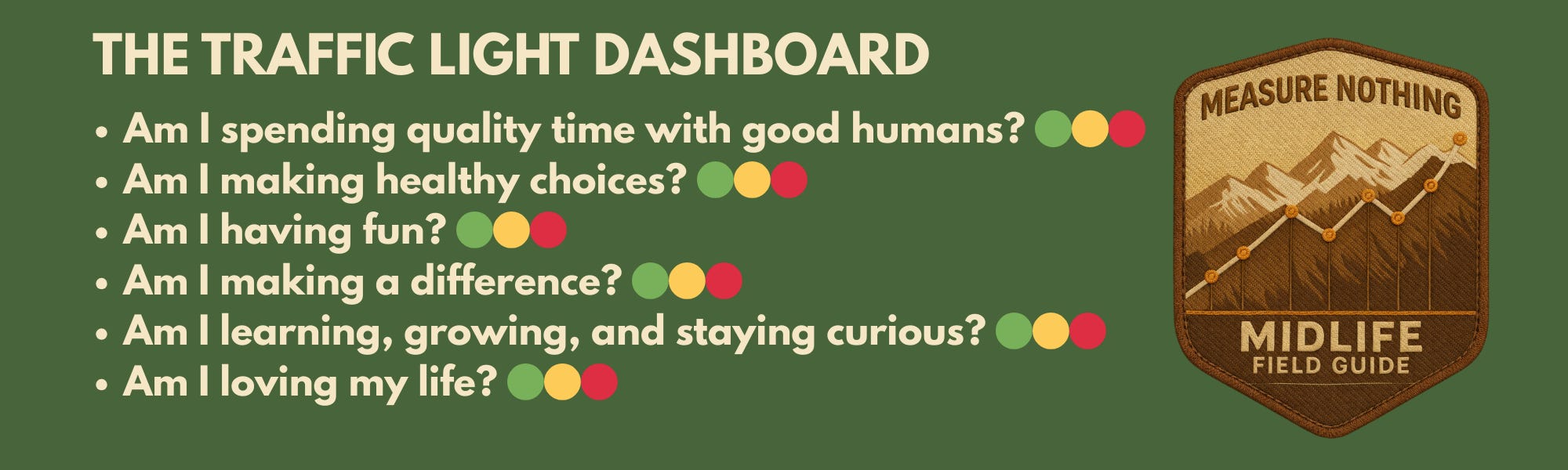
I am going to apply Rob’s thinking to my own dashboard. None of the things I have considered are quantitative. If something is going to shape my behaviour, and therefore my life, these are the factors I’m going to consider:
Am I spending quality time with good humans?
Am I making healthy choices (without becoming obsessive about it)?
Am I having fun?
Am I making a difference?
Am I learning, growing, and staying curious?
Am I loving my life?
Green. Yellow. Red.
🟢🟡🔴
I think that’s enough for me.
Going forward, I have no plans to resume wearing my Apple Watch or Oura ring. I have no interest in regularly checking follower counts, growth metrics, or open rates.
I’m going to use Rob’s 🟢🟡🔴 idea and my own intuition to guide my decisions and behaviour.
And I’m going to keep asking more coach-like questions (What do I really want?) and try to refrain from offering unsolicited advice or solutions to others 🤪
(If you’re looking for some terrific coaches to follow or work with, check out Peter Reek, Natalie Ruskin, Andrea Rathborne, Jen Moroz, and Michael Bungay-Stanier.)
Are there any dashboards you’ve started questioning? Let me know in the comments!
Thanks for reading,
Steve
(P.S. Since sending this post out via email, I’ve had many people tell they would like this basic dashboard to exist… so I built it! Let me know what you think if you decide to give it a try! https://trafficlight.midlifefieldguide.com/ )
WOW, this is incredible, thank you so much for commenting on my post so I could see yours! Wonderful work--and congratulations on your book!
green light! of all your wonderful posts, i think this is my favourite. (that is not a score! just sincere appreciation)
in her book A Truce That Is Not Peace, miriam toews says that answers are for douchebags. living in the questions is the way to go.
bravo my wise and courageous friend for finding your own meaningful (and helpful!) way to express that. thank you. #steveisnotadouchebag